


Jo Baer
Discourses on Abstraction and Space: The Minimalist Practice of Jo Baer
The American artist Jo Baer (1929–2025) occupies a unique and historically significant position within the history of Minimal Art. Whilst the Minimalist movement of the 1960s and 1970s was predominantly characterised by three-dimensional, sculptural objects – represented by artists such as Donald Judd and Robert Morris – Baer consistently remained committed to the medium of painting. She defended this decision in art-historical debates, including in a theoretical essay published in the magazine Artforum (1967), in which she defended painting against the accusation that it was mere illusion and established it as an independent, physical-spatial phenomenon.
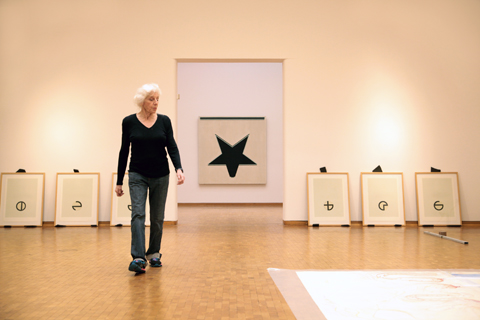
Baer’s minimalist period is characterised by extreme formal reduction, which emphasises the object-like nature of the painted canvas. Characteristic of her oeuvre from this era are large-format, mostly white or monochrome picture surfaces, framed at the outer edges by precise, narrow bands of colour and dark contours. This uncompromising structure diverts visual attention away from a centred pictorial content towards the peripheries of the picture support and the physical edge of the stretcher frame. As a result, the painting is no longer understood as a window onto an illusionist world, but as a concrete object that enters into a direct, reciprocal relationship with the surrounding architecture and the incoming light.
In the context of researching and communicating this radical artistic practice, the way it is presented in museums within the German context is of crucial importance. In 2013, the Museum Ludwig in Cologne became the first German institution to dedicate a comprehensive solo exhibition to the artist. The retrospective focused primarily on her minimalist phase between 1960 and 1975, whilst also drawing a connection to her later, figurative-mythological work.
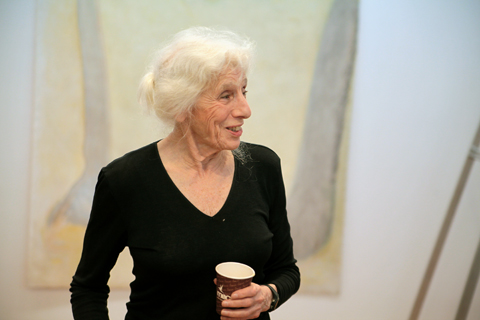
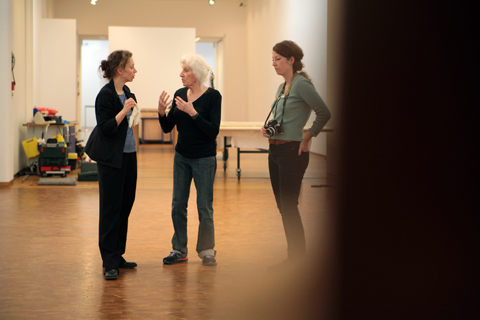
This groundbreaking exhibition was documented on film and in photographs by IKS. The filmmaker and curator Ralph Goertz documented the installation of the exhibition and, working closely with the artist and the curator Julia Friedrich, produced an in-depth film portrait as well as a documentary that permanently preserves Baer’s art-theoretical reflections and her working methods for art-historical research.
The resulting documentary film illustrates how Baer’s reductionist paintings operate within physical space and makes a key contribution to the archiving of one of the most influential positions in post-war abstraction – a position that has, however, long been marginalised in institutionalised art history.
A longer version of the film by Ralph Goertz, who also visited the artist in her studio in Amsterdam, is due to be released in 2027.
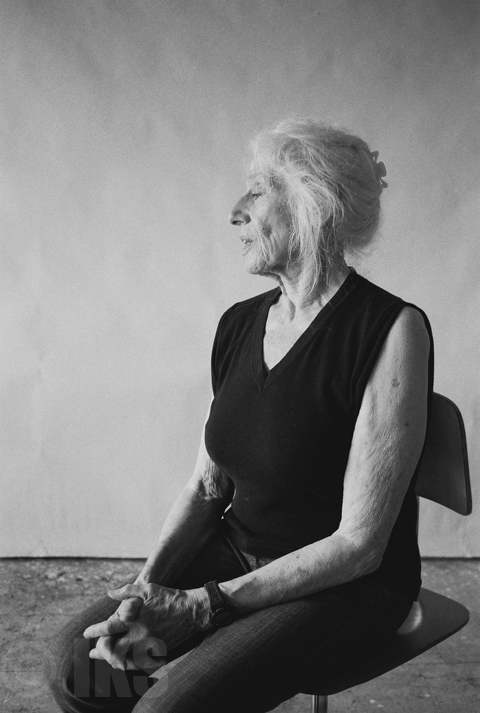
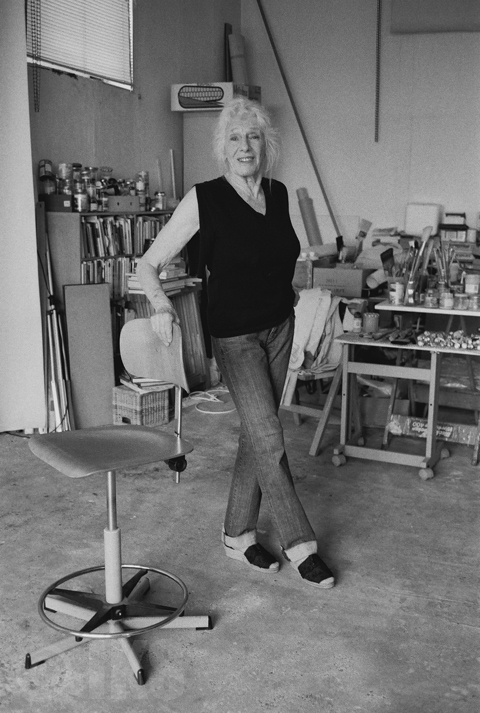
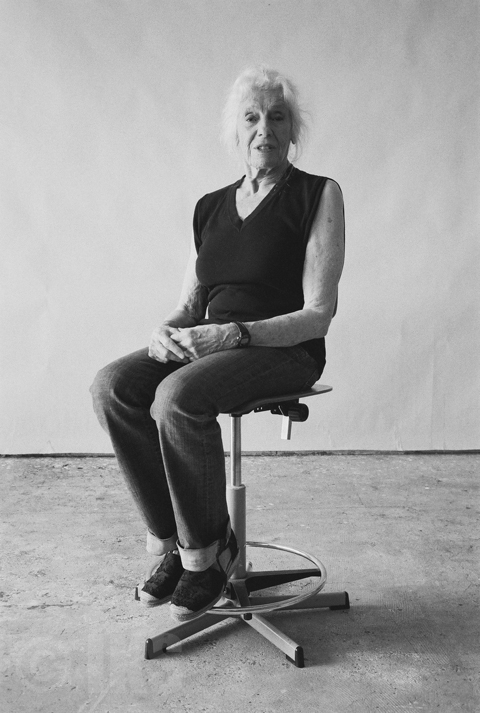
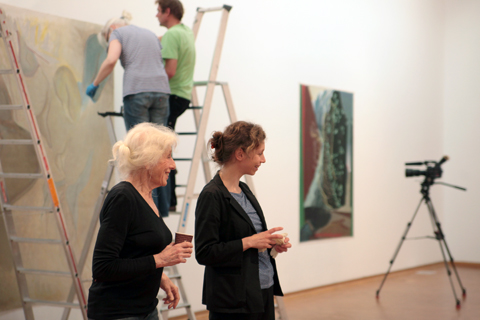
Photographs: Ralph Goertz © IKS-Medienarchiv